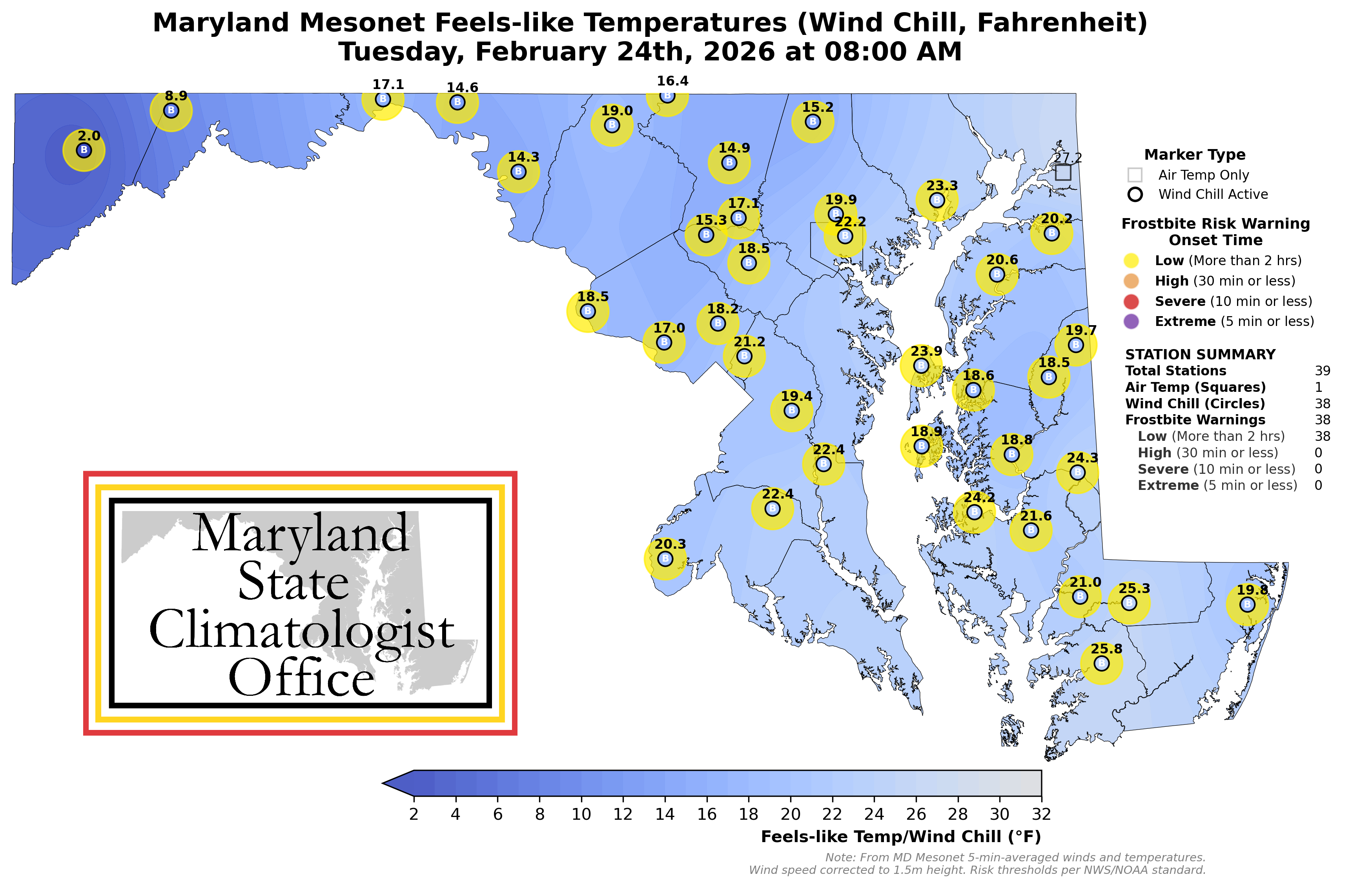
Understanding Wind Chill (NOAA 2024)
Wind Chill or "Feels-Like" Temperatures: Cold air alone can be deadly, but when the air is moving, it feels much colder. The wind chill is the effect of the cold wind on people and animalsas the wind increases, it removes heat from the body faster, driving down skin temperature and, eventually, internal body temperature. Wind chill temperature is therefore based on the rate of heat loss from exposed skin caused by wind and cold, and it can give you an approximation of how cold the air feels on your body.
The wind chill doesn't just make you feel colder than the actual air temperaturethe lower the wind chill temperature, the greater and faster your risk for developing frostbite and/or hypothermia. Hypothermia occurs when your core body temperature (normally around 98.6°F) falls below 95°F. Frostbite occurs when your body tissue freezes; the most susceptible parts are fingers, toes, ear lobes, and the tip of the nose.
It is important to understand that wind chill relates to how quickly the body loses heat; it does not mean objects will cool below the actual air temperature. Therefore, regardless of wind speed, frostbite cannot occur with air temperatures above freezing, but hypothermia remains a significant danger. It is more likely to get frostbite in any situation that leads to prolonged cold exposure, especially during winter windy and cold conditions, even under cold-weather clothing; learn to recognize its different stages (Mayo Clinic 2023a). Hypothermia is a medical emergency because when the body's temperature is dangerously low, the body can’t function properly which can lead to cardiac arrest (when the heart stops beating) and death; learn to recognize its symptoms (Mayo Clinic 2023b).